Monday, May 28, 2012

Bomi County

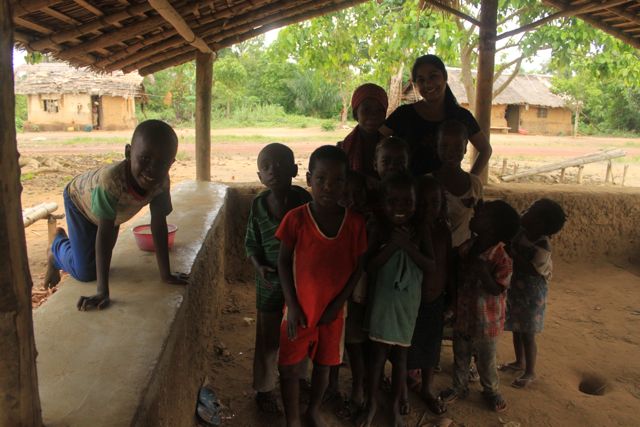
Last Friday was my first trip outside Monrovia to a county. I went to Bomi County where the Social Cash Transfer program is being piloted since 2009. Funded by the EU, partnered with UNICEF, the SCT project targets the poorest of the poor and labor constrained households.
The Social Cash Transfer office that was destroyed during the war and reconstructed by UNMIL (UN Mission in Liberia) Quick Impact Project.
With Jerry Godu, acting National Coordinator for the SCT program and one of the brightest Liberians I have come across so far.
With officers from the Ministry of Finance who are commissioned there on rotation (3 months). They check the payrolls prepared by the SCT program (housed in Ministry of Gender) at the different pay points in Bomi. Beneficiaries come to them with their ID cards and get the money (standard is US$10/ month) from these officers. They appeared to be quite disinterested doing this job and reaffirmed my concerns on staff motivation and interests within the Liberian government, especially at lower administrative levels. 
A female headed household by Hawa Kromah (see ID on the right). A single mother with six children, she is a beneficiary getting more than than the standard cash. She has rebuilt her house over two years and is trying to do farming (below is a cassava plant) to feed the family and possibly, sell to the market. The nearest market is at least 10km away.
 Below is the SCT car gifted by the UN.


Another beneficiary, Abou is taking care of a 11-person household. The cash allows him to buy a 25kg bag of rice to feed the family and the Norwegian Refugee Council has built a 2-room mud house for him. This is just enough for survival, but not to make things better for him and his family.
Weekend update: Robertsport, a beach town about 2 hours drive from Monrovia...detailed blog on Robertsport to follow soon. In the meantime, enjoy the pictures :)


Thursday, May 24, 2012

The Missing Middle


Yesterday night, after a beer at Jamal's Boulevard Cafe (a quaint open air restaurant opposite old Tubman house on Tubman Boulevard - named after President Tubman before Charles Taylor came to power); I was reading a CFR report on women entrepreneurship in post-conflict regions. The paper highlighted certain salient points that struck home with some of the initiatives of the Ministry of Gender, along with its partners.

To put it in context, around the world, it is largely believed that small and medium term enterprises (SMEs) drive economic growth.  For instance, the Global Entrepreneurship Monitor estimates that ‘140 million entrepreneurs are expected to create at least five new jobs each in the next five years’.

However in aid economies like Liberia, SMEs are unable to compete with bigger firms due to lack of capacity, capital and skills. Liberian examples range from infrastructure projects to oil contracts to the hospitality industry.

Although programs like EPAG (Economic Empowerment of Adolescent Girls and Young Women), a joint pilot project to encourage entrepreneurship among women targets economic empowerment for young women and girls, they are usually constrained to petty trade like selling old clothes, groceries etc.

The main issue here is not with the skill, but with capital and seed money. Risk capital is tough to secure in such economies and especially for these sections of the populace who do not have necessary collateral nor the communal harmony (surprisingly) to take joint risk and pool together joint funds.

The result: a huge gaping ‘missing middle’ where SMEs stay outside private sector development initiatives. I am yet to figure out the possible solutions.

How I got through the 60p report:


Local Monrovian Club Beer and a delicious Liberian dish called ‘attike’ (my version of how it should be spelt on paper) that is their staple cassava (similar to cous cous) with avocado, fried plantain and hot pepper sauce!

Tuesday, May 22, 2012

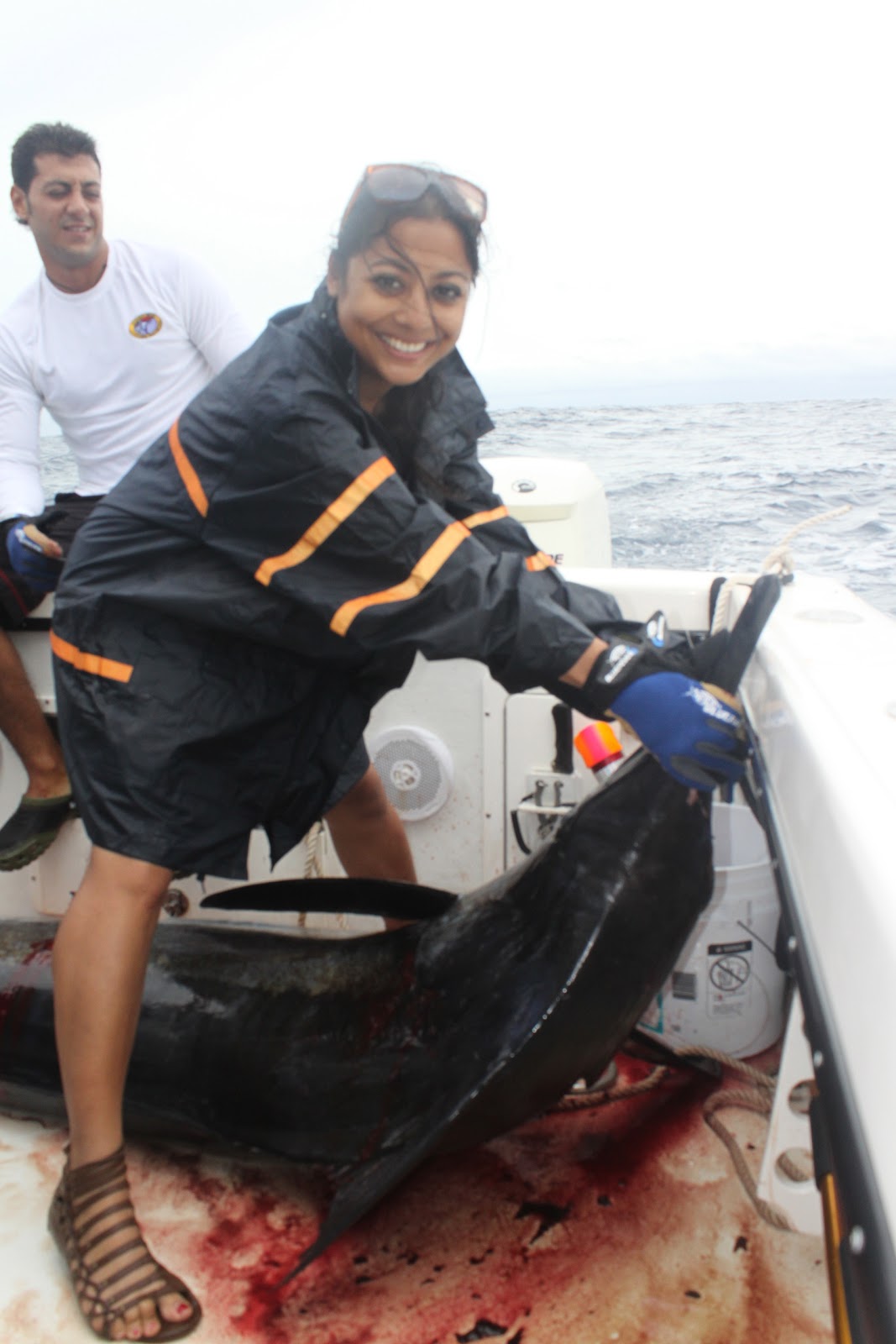
A 115 kilo Blue Marlin


Bon jour!

And so… week three starts. The goal is to learn and analyze the different programs led by the MoGD with its different internal and external partners. These include EPAG (Economic Empowerment of Adolescent Girls and Young Women), a 2 year pilot program aiming to increase employment and income for Liberian women, a Social Cash Transfer scheme that is arguably successful and is seen as a viable way to 'pull the poorest out of the poverty trap' (Jeffrey Sachs' 'End of Poverty' flashback). 

My goal for the coming weeks is to fit the current Monitoring and Evaluation Framework being developed at the Ministry at the moment within these programs and to also assess the internal capacity and capability gaps within each. Phew! I am still not sure where to start but I plough my way patiently, through the considerable number of dog ear-marked reports written by various national and international consultants, i.e. my predecessors over the years. 

(Anyone with experience with best practice cash transfer programs are welcome to comment/ give suggestions!)

Weekend update: These are the last few days of the fishing season. The season runs parallel to the dry season in Liberia (from late October-early November to late May). And so…we went fishing in Marshall Islands in Mugubi Country (about two hours drive from Monrovia). There was a storm the night before and still drizzling in the morning when we set out. It was a refreshing change from dusty and noisy Monrovia and be part of the fresh and lush green vegetation and brown red muddy tracks of Mugubi. The catch of the day and indeed of the season according to our Lebanese fishing crew was a 115kilo blue marlin that took 30 ms to be fought in and pulled into the boat. Bloody pictures to follow soon :)

Au revoir from a stuffy cubicle in the Gender Ministry for now. 

P.S. I discovered a cheaper super-market called Exclusive, owned by the Lebanese with ready-to-eat ‘pav bhaji’ (Indian street food of spicy mashed veggies with bread). Looks like it’s going to be dinner tonight!

Friday, May 18, 2012

A bit about work.


A 5 year strategic plan for MoGD: Yesterday, the Policy Department organized a gender sector roundtable to strengthen the working relationship between the MoGD, MACs (Ministries and Agencies), donor agencies and other partners. The two-hour roundtable spearheaded by Minister of Gender, Julia Ducan-Cassell had presentations by Annette Kiawu, Deputy Minister for Research and Technical Services and Jewel Howard-Taylor, Senator from Bong County among the notable ones.

Main takeaway points:

1.     The National Gender Policy (2009) looks at direct intervention of the government to induct ‘gender mainstreaming’  in 4 areas – education, health, justice and agriculture.

2.     Each sector is mandated to produce sex disaggregated data to understand the targeting of women in each of these sectors.

3.     The recently formed Monitoring and Evaluation (M&E) unit led by an international consultant Mabuya Mubarak has come up with a rating system (Good/ Promising/ Fair/ Not Satisfactory) based on a set of specific criteria.

4.     The process to institutionalize gender within the budget (the new budget year starts 1 July)  is being tried within the Finance Ministry, albeit with a number of challenges.

My thoughts: Liberia’s vision 2030 sees the small West African country as a middle-income nation, ruled by democratic principles and well on the way to economic stability. Whilst the country will continue to receive substantial aid chiefly due to the credibility of senior women leaders committed to rule of law and democracy, the challenge will be to conceive and enact laws that bridge the gap between the reality and improving situation in Monrovia and the rest of the country (15 counties), that Senator Taylor referred to as the ‘real Liberia’.

Thursday, May 17, 2012

Last few days of the dry season @ Kendeja.

Expat Living in Liberia


Coming to Liberia gives me my first taste of expat living in development communities that you inevitably get sucked into; till you start believing the expat world and forget the real. In Monrovia, there are several such spots i.e. Mamba Point Hotel on the beachfront, the hotel ‘to be seen in’, where senior UNMIL, USAID program managers have working lunch meetings and interns from all over the world camp for the whole day to get access to the relatively faster Internet. (Carli and I were no exception….we spent whole of Saturday and Sunday last week in one of the corner couches drinking endless refilled cups of coffee and working).  Then there is Kendeja and Robertsport (where we plan to go this weekend), beachfront villas you can escape to from the old decrepit government buildings where we spend our whole day. There, you can go fishing during the season, relax on the beach during the summer months, go to Jamal’s café for their reggae and hipco DJs and build up a life around yourself.

Which brings me to hipco:

Hipco is hip hop sung in colloquial English, i.e. the form of English you hear on the streets of Liberia. Although colloquial English retains a lot of English syntax, it can be a bit daunting at first because it is spoken very fast, many consonants are not pronounced, and a lot of words are borrowed from other local languages. But it has become the language of choice for young rappers. And much like hip hop, hipco has grown into its own culture, with its own lifestyle, dance moves and music. Today hipco often refers to more than just a type of rap, it’s a way of life in Monrovia. Carli and I saw this in action in a local Liberia party we attended on Myrtle Beach over the weekend. The men were in singlets with ear studs and a lot of the younger women in tiny shorts and tubes, the scene resembling the making of a hip hop video without the smooth editing and super skinny models. This got me thinking on the influence of the US in Liberia, a country founded by freed American slaves and where every other resident either has family in Minnesota or Maryland. Pictures to follow soon.